Should restaurants replace beef tallow?
Restaurants don't need to replace beef tallow today. But they should know what their Plan B looks like before a supply or pricing issue forces a rushed decision.
A practical Plan B isn’t simply a backup oil. It’s a pre-tested fryer program evaluated against your standards for food quality, fryer performance, handling, supply continuity, and operating economics.
For procurement leaders, the issue is planning risk. U.S. cattle supply remains historically tight:
-
According to the USDA’s July 2026 Cattle report, U.S. cattle and calves totaled 94.2 million head on July 1, 2026, including 28.5 million beef cows.
-
The 2026 calf crop was estimated at 32.5 million head, 2% below 2025.
These conditions are one reason procurement teams may want to monitor their tallow market exposure and evaluate contingency options.
Research from Moving Parts, LLC, an agricultural commodity risk-management consultancy, reinforces that market tightness is likely to persist.
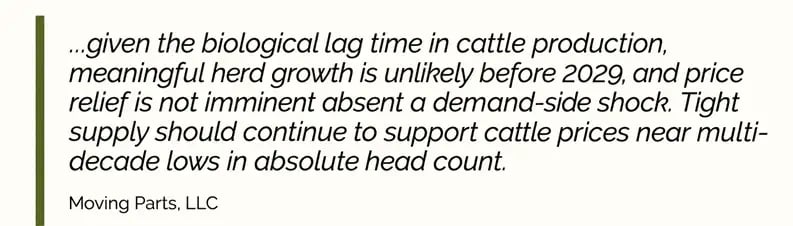
Its analysis suggests that cattle-market conditions may remain a planning consideration for buyers, reinforcing the value of evaluating alternatives before a supply or pricing disruption creates urgency.
For operators, that means beef tallow and its alternatives remain a sourcing variable worth actively managing, not simply waiting out.
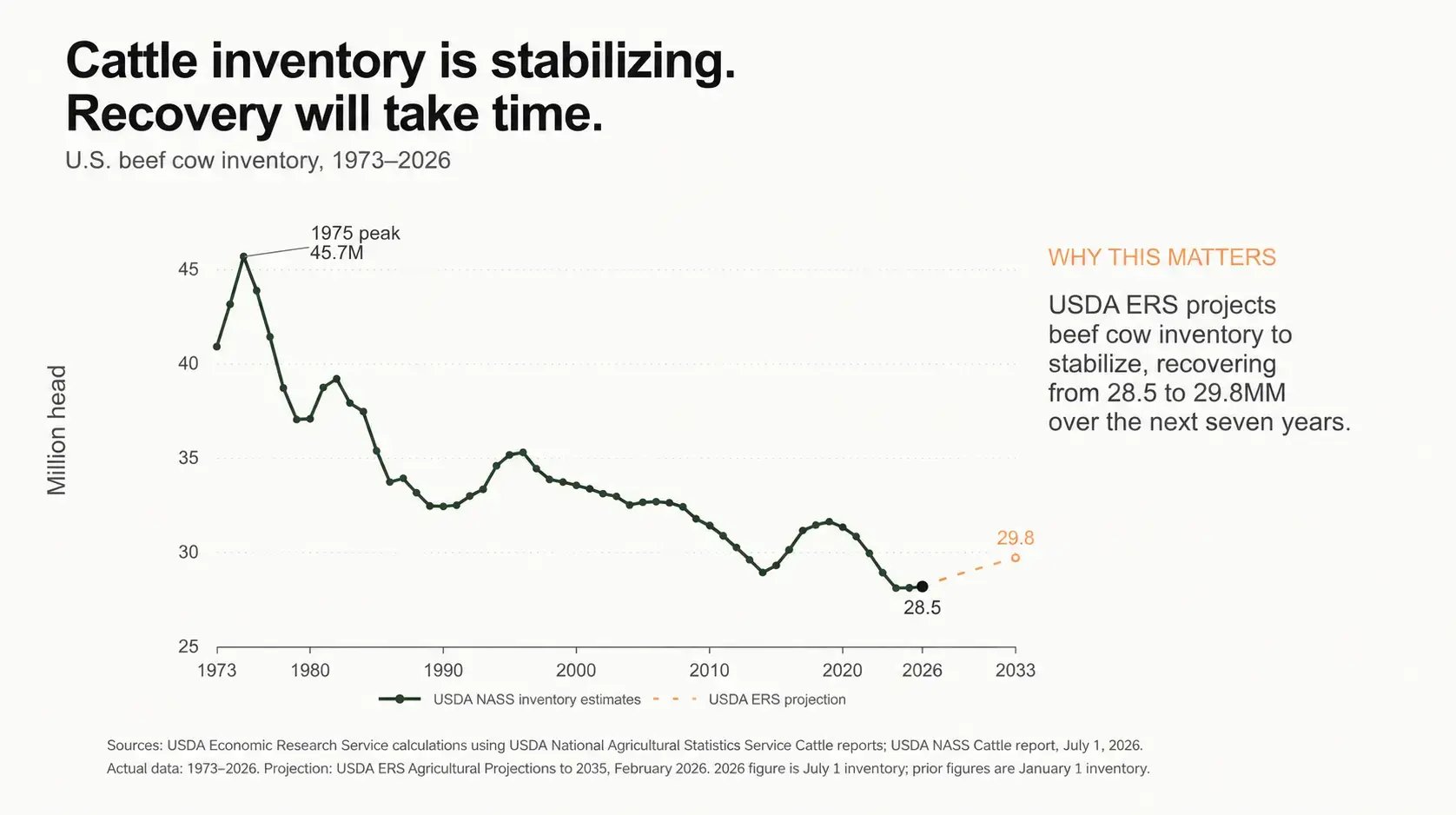
A tight cattle market is a planning issue
Beef tallow can be an important part of a menu. It can also bind a restaurant group to a single animal-fat market that may stay constrained for some time. Cattle production recovers slowly, and inventory data doesn't point to an immediate supply-driven reset.
That doesn't mean that every restaurant needs to change its fryer program. But it does mean that procurement, operations and culinary leaders have a reason to evaluate contingency options now.
Evaluate fryer program economics, not just the oil
Any alternatives to tallow should be evaluated against the full fryer program, not simply the delivered cost per pound. The right option depends on the menu, equipment, food mix, temperature, filtration practices, desired fry life, guest experience, supply requirements, and operating economics.
For procurement, this full-fryer-program perspective brings purchasing decisions and economic implications into focus. For operations and culinary teams, it keeps the measures that matter most in view: food quality, fryer performance, handling, and day-to-day fit.
What might a tallow alternative look like?
There’s no single, universal substitute for beef tallow. Depending on the application, a restaurant may consider and evaluate conventional fry oils, high-oleic options, specialty oils, or purpose-designed blends. The goal is to identify an option that works best for the food, the fryer, the team, and the business. A strong program should help a team protect the qualities guests notice while giving the business more flexibility in how it plans, purchases, and supplies oil across locations.
How to compare beef tallow alternatives
A useful evaluation assesses four areas that shape the real operating program:
-
Flavor and finished-food quality. Does the oil support the flavor, color, texture, and hold time your menu requires?
-
Fryer performance. How does it perform under your actual temperature, volume, filtration cadence, and food mix?
-
Supply continuity. Can the program be sourced and delivered in a way that supports locations, volume, and planning needs?
-
Operating fit. Do storage, handling, filtration, training, and kitchen routines work for the people running the fryers every day?
Because beef tallow and plant-based oils can behave differently during transfer, cooling, filtration, and disposal, any change should be evaluated carefully through a technical review. A controlled process can help teams address equipment, handling, and hot-oil safety considerations before a broader rollout.
Run a trial where it matters
The best way to answer these questions is through a controlled trial. Establish a baseline for the current program, then include locations with different volumes, dayparts, equipment, and food mixes. Agree in advance on what procurement, culinary, and operations teams will measure and review.
A good trial gives decision makers a shared view of food quality, fry life, labor, supply continuity, and total operating impact. It also creates a practical rollout plan if an alternative proves to be the better fit.
Request a Fryer Program Assessment
Catania Oils can help procurement, culinary, and operations teams establish a baseline, identify viable alternatives, and run a controlled comparison measuring food quality, fry life, filtration, labor and handling, supply reliability, and operating economics.
You don’t need to decide today whether to replace tallow. You need to know what your Plan B looks like before you need it.
Request a Fryer Program Assessment from Catania today to proactively compare your options and build a practical Plan B on your own terms and timetable.
Why Catania Oils
Catania Oils works across multiple plant-based oil categories and applications. Our goal is to help teams identify the solution that best balances food quality, fryer performance, supply reliability, and operating economics.
Source:
USDA National Agricultural Statistics Service, United States Cattle Inventory Report, July 24, 2026. https://www.nass.usda.gov/Newsroom/2026/07-24-2026.php USDA’s July 2026 Cattle report