As recently seen in: Store Brands

Avocado oil continues to gain traction among consumers and food manufacturers worldwide. According to Fortune Business Insights, the global avocado oil market is projected to grow from $717.56 million in 2026 to $1.36 billion by 2034.
Widely considered one of the healthiest and most sustainable oils, it is used in everything from potato chips to mayonnaise and salad dressings. With so many options to choose from, savvy shoppers make informed choices based on perceived quality, nutrition, and trust. Many consumers are willing to pay more for foods that they believe contain the premium ingredients that are listed on the label.
A new study by the University of California, Davis, published in the journal Applied Food Research, is raising questions for manufacturers and consumers alike. 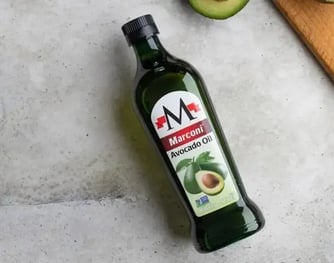
Researchers found 100% of salad dressings tested, 93% of chips, and 71% of mayonnaise labeled as containing avocado oil had oil compositions deemed inconsistent with authentic avocado oil under the Codex standard.
While this sounds alarming, the truth is more complex when it comes to authenticating avocado oil across today’s food supply chain. Premium products such as olive and avocado oil have a long supply chain journey from grower to consumer, and findings usually require more context.
Documented quality and purity issues in premium oils such as extra virgin and avocado oils are not new. While the UC Davis study has brought renewed attention to the issue, interpreting the findings requires considering several important factors beyond the headline.
Beyond the Headlines
Although the study accurately reports what was found in the products tested, those findings must be interpreted within the broader context of today’s global supply chain. Authenticating premium oils is rarely as simple as a single test result, and several factors deserve consideration before reaching a broader conclusion.
-
Small sample sizes can skew results: fewer than 60 products were tested from one California supermarket. The study analyzed lipids recovered from finished retail foods but did not cross-reference those lipids with incoming retailer oil supplier lots. It also did not trace the recovered oil back to an identified ingredient supplier or manufacturing lot.
-
Standards and their interpretation can vary: avocado oil is relatively new to the market, and Codex has emerged as one international standard by which to evaluate composition and purity. In fact, the U.S. has not adopted Codex as the standard by which to judge the purity of avocado oil. Many suppliers also recognize source-verified, analytically authenticated avocado oil, which may contain values that fall outside the Codex range.
-
Economic Adulteration / Food Fraud: more prevalent than consumers realize. When people hear the words “food fraud,” they immediately think of bad actors deliberately selling mislabeled cases of oil for a profit. The reality is far more nuanced and harder to prove. Today’s global supply chains are complex, and premium ingredients may pass through many hands before reaching a consumer’s pantry.
Manufacturers can unwittingly purchase adulterated ingredients from suppliers they trust. Retailers may stock products they believe meet their quality standards. Who loses? Consumers who are unknowingly paying for products that fail to live up to the promise on the package.
Food fraud is not a new concept. It affects products ranging from seafood, honey, and spices to olive oil, coffee, and vanilla. Premium ingredients have always been easy targets for economically motivated adulteration because small changes can yield big profits. In the oils industry, food fraud can take the form of short-weighting shipments, underfilling packages, or adulterating premium oils like olive and avocado oil by blending them with less expensive oils such as canola or safflower.
Consumers may never detect a difference in taste or appearance, but that does not make the substitution acceptable. From both a financial and nutritional perspective, when a label claims 100% avocado oil, olive oil, or extra virgin olive oil, consumers deserve to get what they’re paying for.
Supplier Integrity, Responsibility, and Traceability
For food brands, transparency matters. Consumers care where their food comes from, how it's made, and whether companies live up to their promises. Trust has become one of the most valuable ingredients any brand can offer.
Retailers and manufacturers that rely solely on supplier paperwork for oil authenticity should look deeper. Certificates of Analysis and supplier documentation are important, but they are no longer enough on their own for premium ingredients. Verification and traceability matter.
Manufacturers should be asking the tough questions. How often are ingredients tested? Is testing conducted independently? Are suppliers held to measurable standards of authenticity and purity? What systems are in place to identify problems before products reach consumers?
In our operations at Catania Oils, we use multiple forms of analytical testing, includingNuclear Magnetic Resonance (NMR) testing technology as needed. Premium ingredients deserve premium standards. Verification shouldn't happen once; it should happen repeatedly throughout the supply chain.
More importantly, this responsibility extends beyond our own business. The companies that source, manufacture, and sell premium foods have an obligation to verify what they're buying before it becomes what consumers are eating.
The recent avocado oil findings are an important reminder for the entire food industry. Consumers don’t pay more because a premium ingredient is listed on the front of a package. They're paying for the promise behind it.
Food integrity isn't about winning market share or pointing fingers at competitors. It's about protecting consumer trust and preserving the reputation of an industry that depends on it. The most valuable thing any food manufacturer puts into a product may not be the premium ingredient. It is the confidence that the label on the outside matches what is inside.
Consumers deserve both: the ingredient they chose and the confidence they were promised.
Joseph Basile is President of Catania Oils, a leading processor and packer of plant-based oils including olive, vegetable, blended, and specialty oils for bulk manufacturing, foodservice, and retail. Catania Oils has co-authored an has co-authored an NMR study on Avocado Oils.