Skip to content
    french-fries-landscape-cards

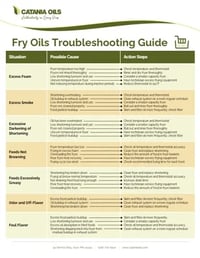
    Fry Oils Troubleshooting Guide

    Running a kitchen or production line means dealing with constant variables. When your frying oil isn’t performing the way it should, it can slow operations, affect food quality, and increase costs. Our Fry Oils Troubleshooting Guide is designed to give you fast, practical answers so you can diagnose issues quickly and get back to delivering crisp, reliable results.

    olive branch lineart light green cropped


    Best Practices

    For Deep Frying 

    Whether you’re navigating smoky oil, off-flavors, rapid breakdown, or inconsistent coloration, this guide walks you through common causes and proven fixes. With insights from our in-house quality experts, real-world testing, and 125 years of frying oil expertise, you’ll gain a clearer understanding of how to maintain performance and get the most from every drop.


    Temperature

    • Ideal frying temperature for most fried foods is 350*F.   Check temperature at least 3 times per day.

    • Verify your fryer’s thermostat oil temperature reading with a manual temperature check using a metal dial-type thermometer.  Follow all safety SOPs when manually checking oil temperature.

    • To conserve oil life, reduce oil temperature below 200*F during slow periods, and shut off the fryer entirely when not in use.

    Procedures

    • For consistent results, keep fryer oil levels at the fryer fill line.

    • Fry all foods frozen. For best results take all products directly from the freezer to the fryer. Do not allow products to thaw and refreeze.

    • For crisp, golden, and delicious fried foods, fill frying baskets only halfway and skim regularly to remove particles from the fryer. Check oil filter on a regular basis.

    Filtering

    • Filter daily to extend the life of your fryer shortening and to prevent flavor transfer. High-volume frying conditions require more frequent filtration.

    • Proper filtration is based on temperature and minimizing oxidation. Prior to filtering, turn off your fryer and allow temperature to drop below 200*F

    • To prevent oxidation, the filtering element should be positioned as close to the pour spout as possible.

    Maintenance

    • Keeping a clean fryer reduces clogging, improves performance, and extends the life of your shortening.

    • Key steps to keep your fryer clean (not intended to replace manufacturer’s suggested cleaning procedures):

    1. Drain the kettle and rise with hot water to remove all food particles.

    2. Inspect drain valves to ensure that shortening is not contacting exposed copper, which will oxidize the shortening and impart unpleasant flavors into your fried foods.

    3. Boil out kettle with a deep fat fryer commercial cleaner.

    4. Scrub kettle with commercial kettle brush.

    5. Drain cleaning fluids from kettle, scrub heating elements or tubes with sponge pad.

    6. Refill kettle with clean water and add 8 ounces of vinegar.

    7. Boil for 5 minutes.

    8. Drain kettle and wipe dry with a clean towel.

    9. Fill kettle to the fill line with fresh or filtered fryer shortening.

    Download the PDF Version of this Resource